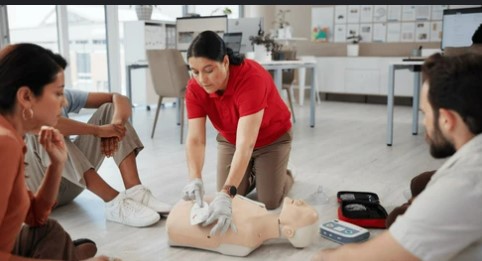
In today’s fast-paced world, the ability to respond effectively to emergencies is crucial. First aid training is an essential skill that can save lives, and teaching it through simulations has become an increasingly popular method. Simulations provide a realistic and immersive learning experience, allowing individuals to practice and hone their skills in a controlled environment. This approach not only enhances the learning process but also builds confidence in handling real-life situations. By integrating simulations into first aid training, educators can create a more engaging and effective learning experience that prepares individuals for emergencies.
THE IMPORTANCE OF REALISM IN FIRST AID TRAINING
Realism in first aid training is vital for several reasons. First, it helps bridge the gap between theoretical knowledge and practical application. Traditional classroom-based learning often focuses on theory, which can leave learners unprepared for the unpredictability of real-life emergencies. Simulations, on the other hand, provide a hands-on approach that allows learners to apply their knowledge in a realistic setting. This experiential learning method helps reinforce theoretical concepts and ensures that learners are better equipped to handle emergencies.
Moreover, realistic simulations can help reduce anxiety and build confidence. When individuals are exposed to lifelike scenarios, they become more familiar with the sights, sounds, and pressures of an actual emergency. This familiarity can help reduce the fear and hesitation that often accompany real-life situations, enabling individuals to respond more effectively. Additionally, simulations can be tailored to mimic specific environments or situations, allowing learners to practice skills relevant to their personal or professional contexts.
ENHANCING ENGAGEMENT AND RETENTION THROUGH SIMULATIONS
One of the key benefits of using simulations in first aid training is the increased engagement and retention of information. Traditional learning methods can sometimes be monotonous, leading to disengagement and poor retention. Simulations, however, offer an interactive and dynamic learning experience that captures learners’ attention and keeps them actively involved. This active participation not only makes the learning process more enjoyable but also enhances memory retention.
Simulations also provide immediate feedback, which is crucial for effective learning. During a simulation, learners can receive real-time feedback from instructors or peers, allowing them to identify and correct mistakes on the spot. This immediate feedback loop helps reinforce learning and ensures that individuals are continuously improving their skills. Furthermore, the opportunity to practice repeatedly in a safe environment allows learners to build muscle memory, making their responses more instinctive and automatic in real-life situations.
TECHNOLOGICAL ADVANCEMENTS IN SIMULATION-BASED TRAINING
The integration of technology in simulation-based training has revolutionized the way first aid is taught. Advanced simulation tools, such as high-fidelity manikins and virtual reality (VR) systems, provide an unparalleled level of realism and interactivity. High-fidelity manikins can simulate a wide range of medical conditions and responses, allowing learners to practice complex procedures and decision-making skills. These manikins can mimic human physiology, providing realistic feedback such as pulse, breathing, and even vocal responses.
Virtual reality, on the other hand, offers an immersive experience that transports learners into a virtual environment where they can practice first aid skills in various scenarios. VR simulations can recreate diverse settings, from urban accidents to remote wilderness emergencies, providing learners with a broad range of experiences. This versatility allows for comprehensive training that prepares individuals for different types of emergencies they may encounter.
The use of technology in simulations also allows for data collection and analysis, enabling educators to track learners’ progress and identify areas for improvement. This data-driven approach ensures that training is tailored to meet the specific needs of each learner, enhancing the overall effectiveness of the training program.
CHALLENGES AND CONSIDERATIONS IN SIMULATION-BASED TRAINING
While simulation-based training offers numerous benefits, it also presents certain challenges and considerations. One of the primary challenges is the cost associated with implementing and maintaining advanced simulation tools. High-fidelity manikins and VR systems can be expensive, and not all training centers may have the resources to invest in such technology. However, the long-term benefits of improved training outcomes and better-prepared individuals can outweigh the initial investment.
Another consideration is the need for skilled instructors who can effectively facilitate simulation-based training. Instructors must be adept at creating realistic scenarios, providing constructive feedback, and guiding learners through the simulation process. Continuous professional development and training for instructors are essential to ensure that they are equipped to deliver high-quality simulation-based training.
Additionally, it is important to ensure that simulations are inclusive and accessible to all learners. This includes considering the diverse needs of learners, such as those with disabilities, and ensuring that simulations are designed to accommodate these needs. By creating an inclusive learning environment, educators can ensure that all individuals have the opportunity to benefit from simulation-based first aid training.
CONCLUSION
Teaching first aid through simulations offers a realistic and effective approach to learning that prepares individuals for real-life emergencies. By providing a hands-on, immersive experience, simulations bridge the gap between theory and practice, enhance engagement and retention, and build confidence in learners. Technological advancements have further enhanced the realism and interactivity of simulations, making them an invaluable tool in first aid training. While challenges exist, the benefits of simulation-based training are undeniable, and with careful planning and implementation, educators can create a comprehensive and inclusive training program that equips individuals with the skills and confidence to respond effectively in emergencies. For those interested in furthering their skills, finding cpr courses near me can be a valuable step.