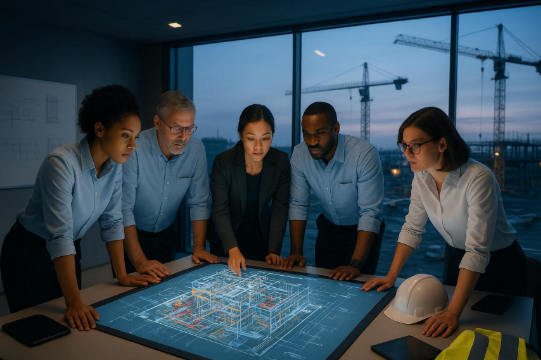
The most common problems in construction projects are budget overruns, long delays, labor shortages, and poor communication between everyone involved. Experts deal with these issues by dropping old paper-based methods and using a proactive, technology-focused approach. With tools like Building Information Modeling (BIM), real-time project management software, and modern risk analysis systems, professionals can spot problems early so projects stay on budget and safe on site.
Working in today’s construction industry calls for a careful mix of leadership and innovation. Whether a company is delivering a large infrastructure job or focused on specialized building reconstruction services, success depends on how quickly they can adapt to changing market conditions. In a field where 85% of projects worldwide face some sort of failure, knowing the key obstacles and proven solutions is critical for any project manager or stakeholder.
What Are the Most Common Challenges in Construction Projects?
Budget Overruns and Cost Escalation
Keeping control of the budget is one of the toughest ongoing issues in construction. Studies show that 9 out of 10 projects go over budget, and large jobs can exceed the original estimate by as much as 80%. These overruns often come from weak cost analysis during bidding or from ignoring how unstable global markets can be.
Experts move away from static spreadsheets and use live financial tracking. By watching costs daily instead of monthly, project managers can spot small overruns before they grow. Standard practices include setting automatic cost alerts and keeping a 10-15% contingency fund to protect profits from the chain reaction of unexpected expenses.
Project Delays and Scheduling Issues
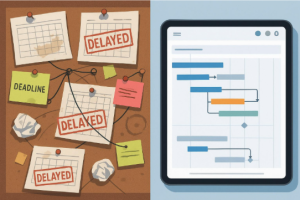
Time equals money in construction, yet missed deadlines are extremely common. Research shows that projects run late by an average of 20 months, draining large amounts of cash in extra labor and equipment use every day the schedule slips. Delays usually come from a mix of bad planning and unexpected site conditions rather than a single major event.
Specialists deal with this by adding buffer periods into schedules. Instead of assuming the best-case scenario, they use predictive tools that account for likely setbacks. Advanced scheduling software helps teams see task dependencies clearly so a delay for one subcontractor does not stop the entire job.
Material Shortages and Supply Chain Disruptions
Unstable global supply chains have made getting materials a serious challenge. Shortages of steel, lumber, and concrete can halt work and drive prices up. In recent years, many contractors have reported that lack of materials is one of the biggest barriers to meeting their contract obligations.
Professionals respond by building strong, long-term relationships with several suppliers so they always have backup options. They order critical materials earlier than usual and monitor market news closely, so they can switch suppliers or products quickly when disruption occurs.
Labor Shortages and Skills Gaps
The construction industry is facing a major shortage of skilled workers, with about 88% of contractors struggling to find qualified staff. As experienced workers retire and fewer young people enter the trades, the skills gap widens, slowing innovation and making it harder to deliver complex designs.
Experts address this by investing in their people and adopting labor-saving technology. Creating a positive workplace helps keep current staff, while tools like robotic scanners and semi-autonomous equipment allow smaller teams to complete more work with high accuracy.

Communication Breakdowns
Poor communication causes more than 30% of project failures and costs the U.S. construction sector over $177 billion per year. When office staff and field crews are out of sync, it leads to rework, missed tasks, and expensive errors. Relying on scattered emails and calls creates “Gray Work”-the repetitive manual effort of hunting for information.
Experts fix this by using a single shared system for information. Cloud-based platforms give everyone instant access to updated drawings, RFIs, permits, and reports. When all stakeholders see the same data at the same time, mistakes drop and decisions get made faster.
Risk Management Deficiencies
Many firms focus mostly on long-term risks while ignoring the smaller daily issues that can stop a project. Only about 27% of executives in construction treat quantitative risk tools as a key part of operations. This leaves projects open to problems like minor disputes or unreliable subcontractors that can cause weeks of delay.
Effective risk management uses a proactive, two-level approach. By running detailed pre-project reviews and using risk software, leaders can spot likely hazards-from cash flow problems to site obstacles-and build strong backup plans before field work starts.
Quality Control and Compliance Failures
Construction defects are more than cosmetic problems; they can create high costs and safety dangers. Weak soundproofing, poor insulation, or air leaks often require expensive repairs and may trigger legal disputes. With many subcontractors involved, keeping quality consistent is a major challenge.
Experts rely on step-by-step inspections and strict use of codes and standards. Large projects often use resident site inspectors and digital quality systems to capture and store all checks. This makes sure every stage meets contract and regulatory requirements before the next phase begins.
Safety Concerns and Accident Risks
Construction is one of the most dangerous industries, responsible for 21.2% of all fatal workplace accidents. Falls, electrocutions, and “struck-by” incidents are the main causes. Beyond the human loss, accidents bring shutdowns, lawsuits, and higher insurance premiums.
Safety teams focus on frequent, disciplined training that goes beyond minimum rules. They build safety into daily site routines and use tools like wearable sensors and AI-based hazard detection to track worker health and spot unsafe conditions in real time.
Outdated Tools and Technology Limitations
Even though construction is a huge global industry, productivity has grown only about 1% per year over the last 20 years. A big reason is ongoing dependence on outdated tools and manual workflows. Companies that refuse to modernize find it hard to compete with more tech-ready firms.
Today’s projects need investment in efficient hardware and software. Experts use tools such as robotic total stations for layout and drones for surveys to raise accuracy. They also arrange on-site training so crews use this equipment correctly and gain the full benefit.
What Causes Construction Projects to Go Over Budget?
Hidden Costs and Unexpected Expenses
Many budgets fail because they only include visible, obvious costs. Hidden items-like extra site prep, rock during excavation, unexpected permit fees, or equipment breakdowns-can quickly reduce profit. Without a careful review before work starts, these costs remain unseen until they become urgent problems.
Experts reduce this risk by carrying out detailed site surveys and due diligence before finalizing numbers. With 3D scanning and data collection tools, they get a clear view of the existing conditions so these “hidden” items are built into the budget from the start.
Fluctuating Material Prices
Material prices can change quickly. In one year, steel prices jumped by 90.3%, and concrete costs keep climbing. These swings can turn a profitable job into a loss if the contract does not allow price adjustments.
To handle this, experts use predictive tools to watch price trends and include escalation clauses in contracts. They spread their orders across different suppliers and follow global economic news closely so they can time purchases and avoid the worst price spikes.
Labor Cost Increases
Labor usually makes up 50-60% of total project costs. Beyond wages, companies must pay for training, benefits, payroll taxes, and overtime. If a project falls behind, overtime can climb rapidly and push the budget far over the line.
Good scheduling and careful use of staff are the main ways experts control labor costs. Digital labor tracking shows where time is wasted so managers can adjust workflows, reduce overtime, and keep spending close to the original plan.
Scope Creep and Change Orders
Scope creep happens when the project’s requirements grow beyond the original agreement without added budget or time. Constant change orders from clients or design changes during construction are the main drivers and often lead to conflict and misused resources.
Experts manage this with clear contracts and open communication. They define the scope and the change process at the start so any extra work comes with matching changes in price and schedule. This keeps the budget from collapsing under unpaid “extras.”
Why Do Construction Projects Experience Delays?
Resource Allocation Problems
About 87% of construction delays are linked to poor use of resources. This occurs when materials, equipment, or labor are not at the right place at the right time. For example, a crew may be ready to pour concrete but the pump truck is still working on another site, wasting a full day.
Project managers deal with this using integrated resource management software. These tools give a high-level view of all sites, equipment, and crews so managers can assign resources based on live data and keep them working where they are most needed.
Weather-Related Setbacks
Severe weather costs the industry billions of dollars each year. Heat waves, storms, or high winds can stop crane use, concrete pours, and excavation. While no one can control the weather, many delays come from a lack of planning for it.
Modern systems now include weather data and forecasts, helping teams plan around storms. They may move more work indoors, reschedule lifts, or push forward critical pours before heavy rain to reduce downtime.
Permitting and Regulatory Delays
Working through lengthy permit and approval processes is a common source of delay. Slow responses from agencies or missing documents can stop work for weeks or months, especially in areas with strict workmanship-related rules.
Experts start permit applications as early as they can and keep careful records. Digital document platforms track each permit’s status so teams can follow up with officials in a timely way and avoid losing time in paperwork “black holes.”
Contractual and Documentation Issues
Teams lose an average of 14 hours per person each week fixing document-related problems. Outdated plans or missing records cause confusion and stop work. If a subcontractor uses an old drawing, the required rework can add days or weeks to the schedule.
The fix is a central digital document system with strong version control. Experts make sure every role-from architect to field worker-can see the latest information on a phone or tablet, reducing confusion from outdated or scattered files.
How Do Labor and Material Shortages Impact Projects?
Impact of Construction Labor Shortages
Too few workers slows projects and can limit a company’s ability to meet its contracts at all. Without enough skilled people, firms may cut corners or hire quickly without proper checks, which hurts quality and stresses their operations.
To handle this, industry leaders like Nova Construction Services use automation and prefabrication. By shifting some work to factory settings, they reduce the number of workers needed on site and raise accuracy, allowing them to do more with a smaller team.
Causes of Skilled Labor Gaps
The skills gap comes from many factors: major job losses during past recessions, many older supervisors and engineers retiring, and limited trade-school training for younger workers. Together, this creates a “knowledge gap” that is hard to close quickly.
Experts close this gap by working with recruiters and building in-house training. With tools like Virtual Reality (VR) for hands-on safety and skills practice, new hires can learn faster and more safely than with traditional methods.
Consequences of Material Delays
Late materials disrupt the whole project sequence. If steel arrives late, framing is delayed, which then delays roofing and interior work. During these slow periods, overhead costs continue even though progress stops, so profits shrink quickly.
Experts use Cost Value Reconciliation (CVR) to check profitability at key stages. If material delays threaten the budget, CVR helps them decide which tasks to move forward or whether to switch to alternate materials that are easier to get.
How Do Experts Address Communication Challenges in Construction?
Stakeholder Coordination Solutions
Construction brings together architects, engineers, contractors, clients, and others-each with different goals. Misalignment among these groups is a major cause of cost overruns. Experts use Integrated Project Delivery (IPD) to bring all parties together early in the project.
With shared goals and shared risks and rewards, IPD creates a more cooperative setup. Regular coordination meetings and shared dashboards keep everyone updated on progress and potential issues, reducing the “silo” behavior seen on many jobs.
Improving Information Flow Between Teams
Information often gets lost between the office and the field. Workers lose nearly 4 hours every week fixing mistakes caused by missing or wrong information. Experts respond by giving field teams mobile tools to capture updates and photos directly from the site.
This steady flow of real-time data lets managers see what is happening without leaving the office. When they spot a problem, they can act right away, preventing a small issue from growing into a major defect.
Document Management Best Practices
Large projects generate thousands of documents, from bids and contracts to safety forms. Handling them well takes discipline. Experts put all documents into a central digital system and control who can view or change each type.
Automatic alerts for expiring documents, inspections, and deadlines help keep the project compliant. Standard naming and filing rules cut down time wasted searching for files and let teams spend more time on actual construction work.
What Are the Risks of Poor Quality Control and How Are They Managed?
Common Quality Issues in Construction
Quality problems often start in ways that are hard to see at first, like weak sound blocking or thin insulation. These issues lead to high long-term costs from repairs and warranty claims. In severe cases, low-grade materials can cause structural problems that threaten the whole build.
Experts deal with these risks by carefully checking suppliers and running regular material tests. By verifying quality before heavy use, they help make sure the structure is built with reliable components from the start.
Strategies for Meeting Compliance Standards
Rules and standards have increased sharply over the past few decades. Meeting them requires organized documentation and frequent checks. Experts use software to map all code and compliance needs and to generate required reports automatically.
With this proactive method, sites stay “audit-ready” all the time. By tying compliance checks into daily workflows, companies lower the risk of fines and stress linked to surprise inspections or non-compliance.
Inspection and Testing Protocols
On large projects, experts often use resident inspectors to provide independent reviews of the work. They check progress regularly and track whether each phase meets the target of zero defects. Digital tools make these checks faster by handling many routine steps and updating records instantly.
Thorough inspections before, during, and after construction are the standard. Using 3D scanning to compare the finished structure with the BIM model lets teams find even slight errors and correct them early.
How Do Construction Experts Improve Safety and Manage Risk?
Identifying and Assessing Project Risks
Strong risk management starts with listing both long-term and short-term threats, including money issues, weak subcontractors, and on-site safety hazards. With quantitative tools, managers can assign a numerical “risk score” to each item.
This data helps firms decide where to focus their efforts. Instead of trying to handle every possible problem at once, they concentrate on those most likely to occur and most likely to cause serious harm to schedule, budget, or safety.
Safety Training and Best Practices
Safety training works best when it happens regularly and builds strong habits. Experts go beyond basic OSHA rules by creating site-specific safety plans. By including everyone-from general contractors to temporary laborers-in training, they build a shared zero-accident mindset.
Strict enforcement of safe practices is key. Frequent inspections and open reporting of “near misses” help identify patterns so leaders can improve procedures and prevent repeat incidents.
Use of Technology for Accident Prevention
Technology now plays a large role in preventing accidents. Smart helmets and vests can track heart rate, location, and falls, and they can signal if someone enters a danger zone. AI systems review past incidents and real-time data to predict where accidents are most likely.
Drones support safer inspections by capturing images and video in hard-to-reach or high-risk areas, so inspectors do not have to put themselves in harm’s way. Together, these tools create a kind of digital safety net that helps protect workers.
Which Technologies Help Solve Construction Project Challenges?
Building Information Modeling (BIM) for Coordination
BIM is at the core of digital change in construction. It is a method of managing information by creating a digital model of a building or asset that lives through its whole life cycle. With a shared, constantly updated model, teams work together more smoothly and more efficiently.
BIM also helps solve design problems through automated “clash detection.” For example, software can find a planned plumbing line that runs through a structural beam before anyone starts building, allowing the team to fix the design in advance.
Drones and 3D Scanning for Site Management
Drones are now common for fast and accurate site surveys. They capture high-resolution images of complex sites and turn them into 3D models with precise measurements, cutting survey time and cost compared to older methods.
3D scanners like the Trimble X7 offer automatic calibration for extreme accuracy. Teams use them to record “as-built” conditions and to plan renovations so new work fits perfectly with existing structures, reducing mistakes and rework.
Project Management Software for Real-Time Collaboration
Modern project management apps change how teams share information and get work done. By storing budgets, schedules, and field updates in one place, they provide real-time visibility that helps avoid delays. Features such as automatic task reminders and budget alerts keep everyone on the same page.
These platforms also cut “Gray Work” by standardizing processes. Instead of manually tracking down updates, team members receive immediate notifications and can focus on higher-value activities.
AI and Predictive Analytics for Risk Mitigation
AI and Machine Learning (ML) are changing how construction companies handle risk. By looking at data from past projects along with live site data, AI can highlight likely issues, such as weather disruption or equipment failure, before they strike.
With this insight, firms can reschedule tasks, move resources, or service equipment in advance to reduce the impact. AI-based decisions are usually more consistent and data-driven than manual guesses alone, giving firms a strong competitive edge.
How Do Experts Minimize Delays and Keep Projects on Schedule?
Accurate Project Forecasting Methods
Good forecasting helps teams understand what a project requires. Experts split forecasts into daily, weekly, and monthly tasks and estimate how long each milestone will take. They seek feedback from key team members and consider likely obstacles so targets stay realistic.
Setting expectations early is important. If a client’s requested timeline is unrealistic, experts propose alternative schedules that can actually work. This open discussion at the start helps keep control of the program and reduces the risk of later delays.
Resource Management and Workflow Optimization
Good workflow planning is about more than just having enough crew members; it is about assigning them to the right tasks at the right time. Experts often use parallel work, where several phases run at once instead of in strict sequence.
By adjusting staff and equipment between tasks when dates slip, managers keep progress steady. Digital tools give them visibility to make these choices quickly and avoid wasted labor or idle machinery.
Adaptive Scheduling and Contingency Planning
A construction schedule should act like a living document. Experts use adaptive scheduling so they can react quickly to changes. If a shipment is late, they update the plan immediately and move crews to other work.
Backup planning supports this flexible schedule. By building extra time into key activities and preparing alternate approaches for critical path tasks, experts stop single problems from growing into major schedule failures.
What Expert Strategies Prevent Future Construction Challenges?
Continuous Improvement and Lessons Learned
The best construction firms do not simply close a project and walk away. They run a “lessons learned” review to see what worked well and what did not. By analyzing data from completed jobs, they improve methods and avoid repeating the same mistakes.
Over time, this steady improvement shapes a stronger, more flexible business. Lessons learned become standard procedures, raising the chances of success on every new project.
Leveraging Integrated Project Delivery
Integrated Project Delivery (IPD) is a method that aligns all parties’ interests from the start. By keeping all project data on one shared platform, IPD reduces risk and supports transparency and shared responsibility.
This method works especially well on complex projects where goals can easily clash. With architects, engineers, and contractors collaborating early, designs are more buildable and the project is better prepared for smooth execution.
Encouraging Cross-Disciplinary Collaboration
Innovation grows where different trades and disciplines talk openly. Experts promote cross-discipline teamwork with tools like Mixed Reality, which lets general contractors and specialty trades (like MEP and concrete) view and discuss 3D designs at the same time.
This way of working helps teams spot conflicts early and fix them before construction. When everyone sees how their work fits into the whole project, quality goes up and rework drops sharply.
Key Takeaways for Overcoming Common Construction Challenges
Construction is going through a major digital shift, driven by the need to solve long-standing problems with modern tools. Budget overruns, labor shortages, and safety risks are serious, but they can be managed.
The path to stronger, more reliable projects in 2026 and beyond lies in moving away from manual, outdated processes and adopting technology-based methods that rely on data, openness, and forward planning.
The industry is also focusing more on sustainability. Since construction is responsible for nearly 40% of global CO2 emissions, many experts are adopting greener materials like hempcrete (made from hemp and lime) and recycled steel. These options lower environmental impact and help address material shortages while improving energy performance.
By combining sustainable practices with advanced project management tools, the construction sector is building a future that is more efficient, profitable, resilient, and environmentally responsible.