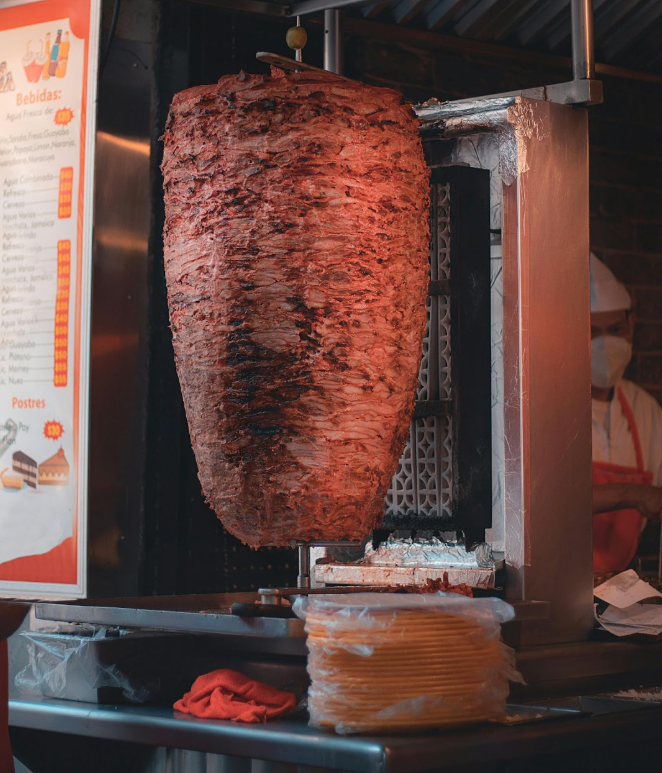
Döner kebab is often treated as a convenient street food, but its real significance lies in how it compresses centuries of Turkish culinary history into a single, fragrant slice. The dish is not merely “meat on a spit.” It is a living archive of mobility, empire, urbanization, and the modern nation-state—each era leaving behind techniques, preferences, and meanings that still cling to the crisped edges of roasted lamb or beef.
In that sense, döner can even become a metaphor for contemporary life: as people scroll for entertainment or stumble across fan tan live casinos during an otherwise ordinary evening, the rhythm of quick choices mirrors how döner itself was refined for speed and consistency in fast-moving cities. Yet the roots of the dish reach back to slower, harsher landscapes where survival demanded ingenuity, and cooking was shaped by migration more than markets.
Nomadic Foundations: Meat, Fire, and Mobility
To understand döner, begin with the nomadic and semi-nomadic Turkic communities who moved across Central Asian steppe environments. Their diets favored what could travel, be preserved, and be cooked with minimal equipment: meat, dairy, grains, and hardy herbs. Cooking methods were practical and direct—roasting over open flame, boiling in cauldrons, drying, salting, and smoking. Meat, in particular, was both nutrition and status, and it was treated with an efficient respect: cuts were portioned, fat was valued, and fire was used to transform toughness into tenderness.
While the vertical spit associated with today’s döner is a later innovation, the broader logic of skewered or spit-roasted meat fits nomadic needs. Spits maximize exposure to heat, allow controlled roasting, and reduce the need for pots and fuel. Over time, as Turkic groups migrated westward and interacted with settled societies, these meat-forward traditions blended with regional ingredients and more elaborate kitchen practices. Döner’s eventual form is best seen not as a sudden invention but as a technological and cultural “turn” in a long continuum of roasting techniques.
Imperial Kitchens and the Ottoman Culinary System
The Ottoman period introduced a different engine of culinary change: institutional scale. Large urban centers and palace kitchens required standardization, skilled labor, and a sophisticated supply chain. The empire’s geography pulled together spices, grains, and culinary ideas from multiple regions. This environment encouraged specialized dishes and professional cooking roles, while also elevating certain foods into markers of refinement and authority.
Within this system, kebab culture broadened. Roasting was no longer solely a campfire technique; it became an urban craft practiced by dedicated cooks serving customers with specific expectations. The kebab shop, in its various forms, reflected a growing commercial food economy—one that rewarded showmanship, repeatability, and portion control. Döner’s later success depended on exactly these traits: a visually striking cooking method, the ability to serve many customers quickly, and a flavor profile sturdy enough to remain appealing even under the pressures of volume.
The Turning Point: Urban Demand and the Logic of the Spit
What distinguishes döner from many other kebabs is not just seasoning or cut, but a mechanical idea: rotating meat to cook evenly while permitting thin, incremental slicing. That rotation matters. It produces a surface that browns continuously—aromatic, slightly smoky, and textured—while keeping the interior juicy. Thin slicing, in turn, transforms roasting into a service system: the cook can carve portions on demand, matching the tempo of a busy street.
This logic aligns closely with the rise of modern urban life. As cities grew and work schedules tightened, diners demanded food that was hot, filling, and fast. Döner answers that demand with an almost industrial elegance: one heat source, one vertical stack, many servings. It is simultaneously artisanal and systematic—a balance that made it compatible with both small shops and larger-scale commercial operations.
Nationhood and Culinary Identity: Döner as a Symbol
With the emergence of the modern Turkish republic, cuisine took on new interpretive roles. Food became a way to narrate continuity and modernization at the same time: a link to regional heritage, but also a platform for public culture in an increasingly urban society. Döner benefited from this transition because it could be read in multiple ways. It felt “traditional” in its focus on meat and roasting, yet “modern” in its service efficiency and adaptability.
This dual identity matters. Nation-building often elevates certain foods into informal symbols—everyday dishes that feel shared across class and geography, even if their actual histories are complex. Döner, sold in city centers, bus terminals, and neighborhood streets, fit the bill. It became a recognizable culinary shorthand for Turkishness: familiar, robust, and comfortably assertive in flavor. Importantly, it also carried regional variations—choices of bread, accompaniments, and seasoning—allowing it to feel both national and local.
Technology, Regulation, and the Politics of Consistency
Döner’s rise also reveals how technology and regulation shape “tradition.” Refrigeration, improved butchery, standardized equipment, and reliable fuel sources all influenced what döner became. Even small changes—spit size, slicing knives, heat distance—affect texture and taste. As the dish moved from informal roasting toward a more professionalized street-food economy, questions of quality, hygiene, and ingredient sourcing became central.
This is where the dish becomes analytically interesting: the public often imagines traditional food as static, but döner demonstrates that tradition is frequently managed. Standards can preserve a baseline of safety and consistency, yet they can also narrow experimentation. Meanwhile, supply chains affect flavor in subtle ways: the fat content of meat, the availability of spices, and the economics of portion size all leave fingerprints on the final product. Döner, despite its rustic aura, is deeply entangled with modern systems.
Migration and Global Circulation: Turkish Cuisine Beyond Borders
No account of döner is complete without considering migration. As Turkish communities moved abroad—especially in the late twentieth century—döner traveled with them. In new environments, it adapted. Local tastes, ingredient availability, and market competition encouraged variations in sauces, serving styles, and even meat blends. Yet the underlying structure remained: rotating roast, thin slices, portable meal.
This global circulation altered how döner is perceived at home as well. International popularity can reinforce pride, but it can also spark debates about authenticity, ownership, and dilution. These debates are not merely culinary; they are social and political. They reveal anxieties about representation: who gets to define a national dish, and what happens when a food becomes more famous abroad than in its place of origin?
Conclusion: A Dish That Carries a Timeline
Döner kebab’s journey—from mobile roasting practices to imperial kitchens, from bustling Turkish streets to global markets—shows how cuisine evolves through movement, institutions, and economic realities. It is an edible record of adaptation: nomadic pragmatism reinterpreted through urban demand, then reframed through nationhood and migration. In every shaved slice, there is both continuity and change: the old logic of fire and meat, and the modern logic of speed, consistency, and identity.
If Turkish cuisine is a story of geography and history meeting at the table, döner is one of its clearest chapters—aromatic, enduring, and still turning.